8 Drip Campaign Examples to Steal in 2026
Eight practical drip campaign examples — welcome series, post-purchase onboarding, lead nurture, cart abandonment, re-engagement, product launch, content series, and feedback flows — with the triggers, timing, and KPIs that make each one worth building. Steal the logic, simplify the build, and launch sequences your team can maintain.

Sohail Hussain21 min readWhat happens after someone subscribes, starts a trial, adds a product to cart, or makes a first purchase? Most brands answer that moment with a single email. That's the gap. One message acknowledges the action, but it rarely moves the relationship forward.
A drip campaign does. It turns one action into a sequenced conversation with timing, context, and a next step built in. That's why the best drip campaign examples aren't just clever emails. They're systems that match message to buyer intent.
A strong sequence doesn't flood the inbox. It gives people the right prompt when they're most likely to care. For new subscribers, that usually means a short welcome flow. For abandoned carts, speed matters even more. For onboarding, relevance beats volume every time.
This guide focuses on execution. You'll get eight practical drip campaign examples, plus the triggers, timing, and KPIs that make each one worth building. The point isn't to copy a brand's exact emails. It's to steal the logic, simplify the build, and launch sequences your team can maintain.
1. Welcome Series for New Subscribers
What should happen in the first week after someone joins your list? The answer should never be “send a thank-you email and hope they stick around.” A welcome series needs to do three jobs in order. Deliver what was promised, establish relevance, and create a clear next step.
This sequence matters because subscriber attention is highest right after signup. Campaign Monitor notes that welcome emails consistently outperform standard promotional sends, which is why strong programs treat this as a timed flow rather than a one-off message. The win is not the first open. The win is turning early attention into a habit.

Build the sequence around signup intent
The trigger is simple. A user subscribes. The mistake is treating every signup as identical.
Someone who joined through a discount form needs a different path than someone who downloaded a guide or signed up after reading product documentation. That is where segmentation changes performance fast. A solid email list segmentation strategy lets you match the first few messages to source, intent, and likely buying stage.
Use this framework:
- Trigger: New subscription
- Timing: 3 to 5 emails over 5 to 7 days
- Primary goal: Get the subscriber to the first meaningful action
- Core KPI: Click rate to the first action, then conversion rate from the full sequence
- Secondary KPIs: Unsubscribe rate, reply rate, and time to first purchase or demo request
A welcome sequence worth copying
A practical welcome series usually follows this order:
- Email 1, immediately: Confirm signup, deliver the lead magnet or promised offer, and set expectations for what the subscriber will receive next.
- Email 2, Day 1 or 2: Show the fastest path to value. That could be a best-performing article, a product category quiz, a setup checklist, or a short product tour.
- Email 3, Day 3 or 4: Add proof. Use a customer result, a use case by role, or a concise case study tied to the subscriber's likely goal.
- Email 4, Day 5 or 6: Address friction. Explain pricing, implementation effort, shipping, support, or any objection that blocks first conversion.
- Email 5, Day 7: Make the ask. Offer the trial, purchase, consultation, or next-step CTA that fits the original signup intent.
That structure is repeatable because each email has a job. It also gives you clean testing points. If opens are strong but clicks stall on Email 2, the value path is weak. If clicks are healthy but conversions drop after Email 4, the objection handling is missing the core concern.
What separates an average flow from a strong one
Strong welcome sequences teach subscribers how to use your emails.
They establish cadence, message format, and value early. They also avoid the common mistake of telling the brand story before earning attention. Company background has a place, but it should support the subscriber's goal, not interrupt it.
For ecommerce brands, the first conversion may be a first purchase. For B2B, it may be a demo, a reply, or a high-intent content click. Define that action before writing the sequence. If the team cannot name the first meaningful action, the series will drift into generic education and weak CTAs.
The playbook is simple. Start with the trigger, set the timing, assign one job to each email, and measure the sequence against one conversion goal. That is how a welcome series stops being an example and starts becoming an operating asset.
2. Post-Purchase Onboarding Sequence
The sale is not the finish line. It's the handoff. Post-purchase onboarding works because it reduces buyer's remorse and gets customers to first value fast, whether that means setting up software, using a physical product correctly, or taking the next purchase-related action.
The first email should land quickly after purchase, ideally while the customer still remembers why they bought. For software, that might mean account setup. For ecommerce, it might mean usage instructions, shipping expectations, and support access. Grammarly and Slack both do this well because their onboarding emails are practical, not promotional.
Use the buying momentum
Customers don't need a long welcome speech after they've already paid. They need confidence. Start with the next obvious action, then remove friction around it.
This works especially well for products with setup steps or a learning curve. A buyer who stalls during setup is far more likely to disengage than one who completes one useful action on day one.
A useful walkthrough helps more than a polished email ever will.
A simple sequence that works
Use a sequence like this:
- Immediately after purchase: Confirmation, what happens next, and one action to take now.
- Day 1 or 2: Setup instructions, short tutorial, or product-use guidance.
- Day 3 or 4: Tips that help the customer get a better outcome, not just use more features.
- Around day 7: Troubleshooting help, FAQs, or proactive support invitation.
- Later in the first cycle: Ask for feedback once the customer has had enough time to form an opinion.
Send support options before customers ask for them. That one move often prevents avoidable churn.
Warby Parker-style try-on guidance, Printful setup help, and product education from tools like Slack all follow the same pattern. They reduce uncertainty first. Upsell later.
3. Lead Nurturing Campaign for Sales Pipeline
Lead nurture is where teams often over-email and under-teach. They send the same sequence to every lead, then wonder why engagement fades. A prospect evaluating enterprise software doesn't need the same email stream as someone who downloaded a beginner guide yesterday.
The better model is stage-based nurture. Educational content early. Comparison and proof in the middle. Conversion-oriented asks once the lead starts acting like a buyer. Among drip campaign examples, this one produces the widest range of outcomes because bad segmentation breaks it quickly.
Match content to deal stage
A useful nurture sequence should mirror how someone buys. Early-stage leads need framing. Mid-stage leads need confidence. Late-stage leads need clarity and urgency.
That means your triggers shouldn't rely only on form fills. Use behavior where possible. Webinar attendance, pricing-page visits, demo intent, or product-use milestones all help shape the sequence.
If you're not watching response by stage, you're flying blind. In this context, email marketing metrics that matter become operational, not cosmetic.
What strong nurture actually looks like
One B2B SaaS case study showed what happens when nurture gets more specific. A 5-email onboarding drip over 14 days increased trial-to-paid conversion by 34%, with a 68% open rate and 12% click-through rate, after shifting the content toward immediate feature value. The team also excluded users who had already purchased and used feature activity to trigger follow-ups.
That's the pattern to copy. Don't send “tips” because a sequence needs a third email. Send the next message because the lead has reached the next decision point.
- Top of funnel: Education, pain-point framing, category understanding
- Middle of funnel: Use cases, product comparison, implementation detail
- Bottom of funnel: Demo invite, trial push, stakeholder-ready proof
The trade-off is complexity. More branches mean more maintenance. But one relevant sequence usually outperforms three generic ones.
4. Cart Abandonment Recovery Sequence
Why do cart recovery emails outperform so many other automated campaigns? Because the buyer already did the hard part. They found a product, evaluated it, and started checkout. Your job is to remove the friction that stopped the order.
Speed matters here, but sequence design matters more. A cart recovery flow works best when each email answers a different buying objection. Send the same reminder three times and performance drops. Change the message as intent cools and you give the shopper a reason to come back.

Why this sequence works
Cart abandonment usually comes from a small set of predictable issues. The shopper got distracted. Shipping costs showed up too late. They wanted to compare options. They needed one more trust signal before paying.
That gives you a clear playbook. The first email should restore attention. The second should reduce risk. The third can create urgency or introduce an incentive if margin allows.
Personalization also pulls more weight here than it does in broader promotional sends. Showing the exact product left behind, paired with a direct path back to checkout, usually beats generic "you forgot something" copy. In an analysis of abandoned-cart emails, SaleCycle found that emails sent within the first few hours of abandonment generated the highest conversion rates. That supports the common setup practitioners use: an early reminder, then one or two follow-ups before the cart goes cold.
The recovery sequence to model
Use a three-step structure with distinct jobs for each message:
- Email 1, sent soon after abandonment: Show the cart items, product image, price, and one clear return-to-cart CTA. Remove distractions.
- Email 2, sent later that day or the next day: Answer hesitation. Add reviews, returns policy, delivery timing, payment options, or trust badges.
- Email 3, sent before the buying window closes: Add urgency with care. Low-stock messaging, cart expiration, or a measured incentive can work if the economics support it.
A good benchmark is not just recovered revenue. Watch click-to-purchase rate, recovered-cart rate, revenue per recipient, and unsubscribe rate by email. If Email 3 drives purchases but also trains buyers to wait for discounts, tighten the offer or reserve incentives for higher-value carts only.
One case study from a retail brand showed the upside of a more structured approach. A three-email abandoned-cart series documented by beehiiv outperformed the brand's previous single-email setup and lifted recovered-cart revenue substantially. The sequence used testimonials, urgency, and product recommendations instead of repeating the same reminder.
Cart recovery works when each email has a separate job: remind, reassure, then push.
5. Re-engagement Campaign for Inactive Subscribers
Not every subscriber should stay on your list forever. Some people went cold because your offer changed. Some lost interest. Some still like you but stopped noticing your emails. Re-engagement campaigns work when they separate those groups instead of trying to “win back” everyone with a last-minute discount.
This is one of the most overlooked drip campaign examples because teams often wait too long. They keep mailing inactive contacts, hurt engagement quality, and then launch a dramatic breakup email that feels out of nowhere.
Stop trying to wake up everyone the same way
Treat inactivity in tiers. Someone who hasn't engaged in a short period isn't the same as someone who's ignored months of sends. Your copy should reflect that difference.
Shorter, more personal messages tend to work better than polished brand campaigns here. Spotify-style “we miss you” messaging works because it reconnects around value, not guilt. Netflix-style recommendation emails do the same thing by making the comeback easy.
A preference center matters as much as the reactivation message. Let people reduce frequency or switch topics instead of forcing an all-or-nothing choice.
A re-engagement flow that respects the inbox
A practical sequence usually includes:
- First touch: Reintroduce value. Best content, new arrivals, or a relevant offer.
- Second touch: Ask what they want to hear about, or let them update preferences.
- Final touch: Make the choice explicit. Stay subscribed or opt out.
The primary KPI here isn't just reactivation. It's list quality after the sequence finishes. If inactive subscribers don't respond, remove or suppress them. That improves the health of future campaigns more than endlessly trying to rescue dead addresses.
Some subscribers shouldn't be revived. They should be released.
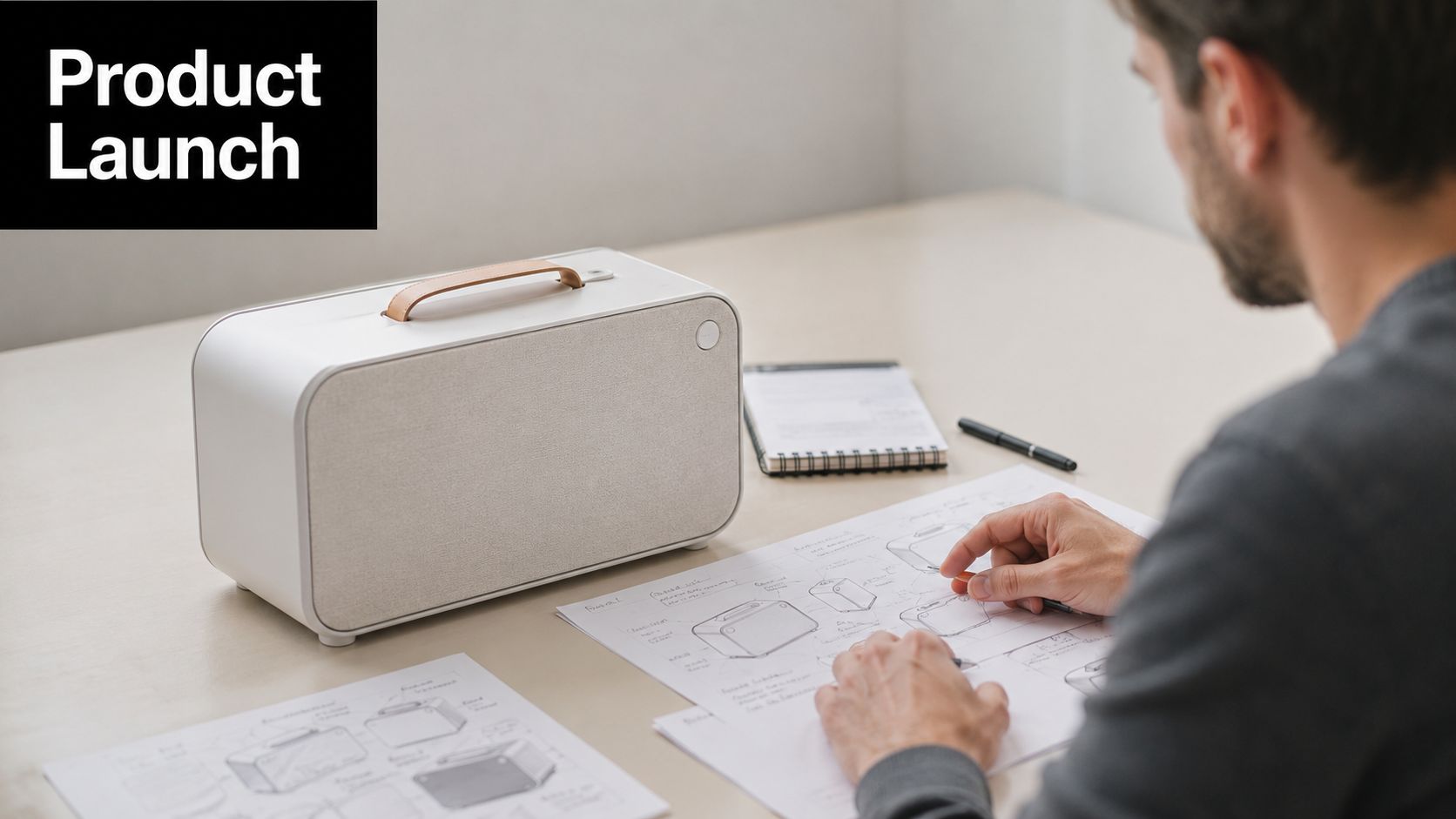
6. Product Launch Announcement Drip Campaign
Most launch emails try to do too much at once. They explain the feature, justify the release, create urgency, and ask for a conversion in a single send. That usually produces a spike of curiosity and not much adoption.
Better launch sequences break the job apart. Tease. Announce. Educate. Follow up with proof. This is one of the most adaptable drip campaign examples because it works for software features, physical products, course launches, and seasonal offers.

Don't send one launch blast and hope
Launch interest isn't evenly distributed. Existing customers, waitlist subscribers, and new prospects need different messages. Notion-style launches often work because they tie product news to a clear use case. Slack does this well with feature education tied to actual workflows.
The sequence should also match buying friction. If the product is self-explanatory, keep it short. If buyers need context, add demos, migration help, or examples.
A launch cadence worth stealing
Use a staged sequence:
- Teaser email: Focus on the problem or future benefit, not full details.
- Launch day email: Reveal the product clearly and make the CTA obvious.
- Education email: Show how to use it or why it matters.
- Proof email: Add customer reactions, use cases, or implementation examples.
- Last-chance email: Only if there's a genuine deadline or limited access.
For small teams, the biggest mistake isn't under-designing launch email. It's overbuilding the tech stack. One underserved issue in this space is implementation for non-experts. A 2025 HubSpot survey cited in this roundup on drip campaign examples found that 68% of SMBs see lack of technical expertise as the top barrier to email automation, and a 2024 Statista report noted that only 32% use advanced automation triggers.
That's why simpler launch logic often wins. Build one clean branch first. Add behavior layers later.
7. Content Series for Thought Leadership and Engagement
A content series is the least flashy sequence on this list, but it often has the longest shelf life. It keeps the brand visible without demanding that every email sell something. For founders, SaaS teams, agencies, and publishers, that makes it one of the most sustainable drip campaign examples you can run.
The mistake is turning it into a blog digest nobody asked for. A thought-leadership series should feel curated. Seth Godin-style consistency works because readers know what kind of thinking they'll get and when it will arrive.
Consistency is the differentiator
Frequency matters, but fit matters more. There's a real gap in most advice here. A 2025 McKinsey study cited in this analysis of email drip campaign frequency found that 54% of consumers unsubscribe because of email fatigue, while only 12% of drip campaign guides specify optimal send intervals by segment. That same summary notes that B2B buyers generally prefer a lighter weekly cadence, while B2C audiences can tolerate more messages during high-intent periods.
That should shape your schedule. If you publish for busy operators, one useful email on a predictable day beats four uneven sends.
How to keep it useful
A strong content series usually includes a mix of formats:
- Practical tip emails: One lesson, one example, one action.
- Trend analysis: Explain what changed and what your audience should do about it.
- Opinion pieces: Useful when the perspective is specific and earned.
- Curated resource emails: Best links, tools, or examples around one problem.
The CTA doesn't always need to be a sale. Ask readers to reply, forward the email, or read the full piece. That keeps engagement active without making the sequence feel transactional.
8. Customer Feedback and Survey Drip Campaign
Feedback campaigns are easy to mishandle. Teams either ask too early, ask too much, or ask in a way that makes the response feel pointless. A good feedback drip is timed to a real experience and gives customers a low-friction way to answer.
This matters even more for SMBs and lean product teams because customer insight often sits inside support tickets, call notes, and scattered inbox replies. A sequence gives you a repeatable way to collect it.
Ask at the right moment
The strongest trigger is a completed interaction. That could be a purchase, onboarding milestone, support resolution, or recent usage streak. Relevance matters more than survey design.
Keep the first ask narrow. If you send a long form immediately, a lot of people will skip it. Start with a simple feedback request, then branch follow-ups based on what they tell you.
For software teams, this also helps surface product friction before churn becomes visible. For ecommerce brands, it helps identify shipping, sizing, packaging, or product-quality patterns early.
A better feedback sequence
A practical feedback flow looks like this:
- First email: Short ask tied to the recent experience.
- Second email: Reminder with a different angle, often focused on improving the experience for others.
- Third touch: Invite a richer response, review, testimonial, or support conversation if appropriate.
When you build these emails, reusable layouts help. That's where email template creation for recurring campaigns saves time across survey asks, reminders, and review requests.
If you need a complementary SaaS-focused perspective, SaaS strategies for customer feedback offers useful ideas on collecting insights across channels.
The important part is closing the loop. If customers share feedback and never see change, response quality drops over time.
8-Point Drip Campaign Comparison
| Campaign | Implementation Complexity 🔄 | Resource Requirements ⚡ | Expected Outcomes 📊 ⭐ | Ideal Use Cases | Tips 💡 |
|---|---|---|---|---|---|
| Welcome Series for New Subscribers | Low–Medium: simple trigger + sequence design | Low: 3–5 emails, basic copy/design, possible incentive | High initial engagement and deliverability; strong open rates ⭐⭐⭐⭐ | E‑commerce, SaaS onboarding, creators, agencies | Lead with value, personalize, segment by source |
| Post-Purchase Onboarding Sequence | Medium: product-specific flows and fulfillment coordination | Medium: 4–7 emails, tutorials/videos, support resources | Improves retention, reduces refunds, increases repeat purchases 📊 ⭐⭐⭐⭐ | E‑commerce with physical/digital products, SaaS, subscriptions | Send first email quickly, make steps actionable, customize by product |
| Lead Nurturing Campaign for Sales Pipeline | High: multi-stage segmentation, CRM & lead scoring required | High: 6–12 emails over weeks/months, ongoing content creation | Increases conversion and shortens sales cycle; ROI over months 📊 ⭐⭐⭐ | B2B SaaS, agencies selling high‑ticket services, enterprise sales | Segment by stage, use progressive profiling, implement lead scoring |
| Cart Abandonment Recovery Sequence | Low–Medium: real-time triggers and dynamic content | Low: 2–3 emails, dynamic product data and simple design | High ROI; typically recovers 10–30% of cart value quickly 📊 ⭐⭐⭐⭐ | All e‑commerce stores, retailers, subscription box services | Send first reminder within 1 hour, show cart contents, mobile‑optimize |
| Re-engagement Campaign for Inactive Subscribers | Medium: inactivity triggers and separate flows | Low–Medium: 2–3 emails, surveys or incentives | Improves deliverability and list health; low reactivation rates 📊 ⭐⭐ | Mature lists, seasonal audiences, publishers, SaaS with dormant users | Segment by inactivity, offer preference center, A/B test subject lines |
| Product Launch Announcement Drip Campaign | High: cross‑team planning, timed cadence and assets | High: 4–6+ emails, teasers, webinars, landing pages, support prep | Generates awareness and rapid adoption if well executed 📊 ⭐⭐⭐⭐ | Major feature launches (SaaS), seasonal collections, course releases | Build list in advance, use tiered access, include demos and scarcity |
| Content Series for Thought Leadership and Engagement | Medium–High: sustained editorial calendar and consistency | High (ongoing): weekly content, research, guest contributors | Builds long‑term authority and engagement; slower direct conversion 📊 ⭐⭐⭐ | Agencies, SaaS educating market, publishers, industry experts | Stick to a schedule, mix formats, include one clear non‑intrusive CTA |
| Customer Feedback and Survey Drip Campaign | Medium: survey logic, segmentation, follow‑up actions | Low–Medium: 2–3 emails, survey tools, incentives, analysis effort | Higher response rates and actionable product insights; variable ROI 📊 ⭐⭐⭐ | Post‑purchase feedback, NPS tracking, product teams, support improvement | Keep surveys short, offer incentives, show results and follow up |
From Examples to Execution Your Next Steps
The biggest lesson from these drip campaign examples is simple. Automation works when it's tied to intent, not when it's used as a substitute for strategy. The trigger matters. The timing matters. The message matters most of all.
That's why copying a brand's sequence word for word rarely works. Their buyers, product complexity, sales cycle, and support model are different from yours. What you should copy is the operating logic. Welcome series build trust while attention is fresh. Cart recovery sequences act before intent fades. Post-purchase onboarding reduces regret and drives product use. Lead nurture closes the gap between curiosity and readiness.
If you're deciding where to start, pick the sequence closest to revenue or retention. For ecommerce, that usually means cart abandonment or post-purchase onboarding. For SaaS, it's often welcome, onboarding, or lead nurture. For content brands and agencies, a thought-leadership series or re-engagement flow can clean up the whole program.
Keep the first version lean. One trigger. One audience. One clear conversion path. Don't wait for the perfect branching logic, perfect design system, or perfect data model. It's more effective to ship a focused automation and improve it than to plan an elaborate one that never launches.
Measure the basics first. Open rate helps you evaluate message-market fit at the inbox level. Click rate shows whether the offer and CTA are working. Conversion rate tells you if the sequence is moving people to action. Reply rate matters more than many teams think, especially in onboarding, nurture, and re-engagement flows. If people answer, the sequence is doing relational work, not just broadcast work.
There's also a practical build lesson underneath all of this. Small teams don't need enterprise-grade complexity to run effective drip campaigns. They need clear triggers, audience rules, and email assets they can maintain. That's where tools, templates, and clean reporting matter more than fancy automation diagrams.
Use these examples as starting points, not fixed recipes. Write the first sequence. Watch where people stall. Tighten the timing. Remove one weak email. Add one better objection handler. That's how a basic automation becomes a durable growth system.
Email still rewards relevance better than almost any other channel. If you want one place to start, build the welcome series or the cart recovery sequence. Then refine it, layer in behavior, and expand. Teams that do that consistently end up with something much more valuable than a list of drip campaign examples. They build an engine.
For teams that want to pair email automation with powerful SMS campaigns, the same principle applies. Use the extra channel to reinforce timing-critical moments, not to duplicate every email.
Mailneo helps you build and refine drip campaigns without turning automation into a technical project. If you want a simpler way to create sequences, track performance, and turn these drip campaign examples into campaigns you can run, explore Mailneo.
Explore: Email Automation
Related Articles
How to Create a Drip Campaign That Converts
A drip campaign is a sequence of pre-written emails sent on a schedule or in response to subscriber behavior, designed to move a lead toward a single conversion goal. Done well, a drip outperforms one-off broadcasts on revenue per recipient by a wide margin. This guide shows how to build one.
How to Set Up an Email Welcome Sequence (With Examples)
A welcome email sequence is a series of 3 to 7 automated messages sent to new subscribers over their first two weeks. Welcome emails average a 68.6% open rate (Omnisend, 2024), so getting the sequence right is the single highest-return project in email marketing.
How to segment your email list for better results
Email segmentation splits your subscriber list into smaller groups based on behavior, demographics, or lifecycle stage so every campaign feels specific instead of generic. Mailchimp's segmented campaigns see roughly 14% higher open rates than non-segmented ones; done right, segmentation is the most impactful thing most senders can do this quarter.
Mastering Email Marketing Metrics: 2026 Guide
Email marketing metrics show whether your list trusts you, your message matches intent, and your campaigns create revenue. This 2026 guide explains the core engagement, deliverability, outcome, dashboard, and troubleshooting metrics SMBs should track.
Ready to supercharge your email marketing?
Start sending smarter emails with AI-powered campaigns. No credit card required.
Get Started Free